How Too Much Screen Time Is Affecting Your Teen's Brain, Focus, Sleep, and Motivation
What Every Parent Needs To Know Before The Problem Gets Worse
📱 It Doesn't Look Dangerous At First
Most screen habits don't start with a problem.
A few extra videos.
A little more gaming.
A few more minutes on social media.
A little more scrolling before bed.
For many families, it feels normal.
After all, technology is part of modern life.
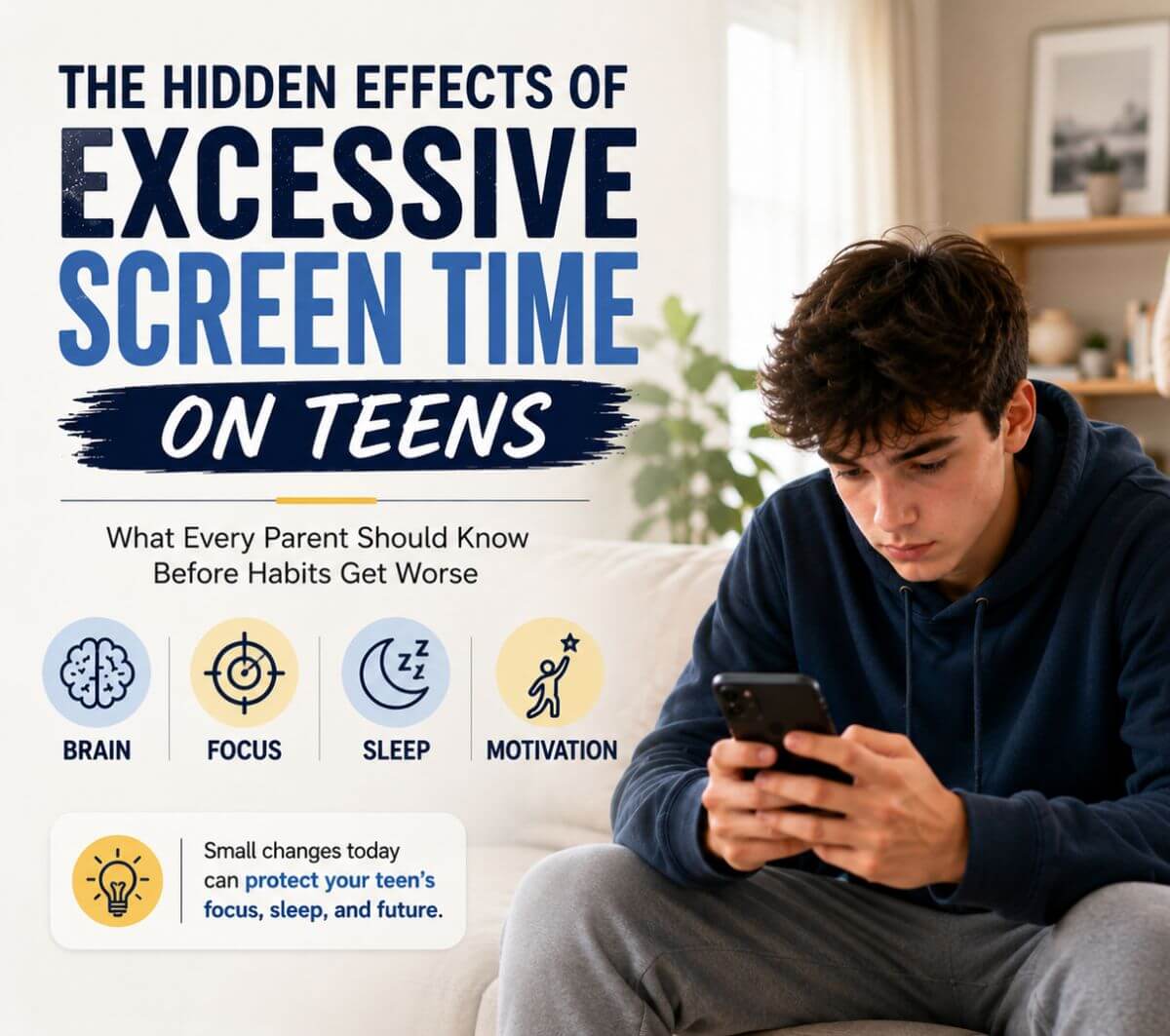
But when screens begin to replace healthy habits, real-world experiences, and meaningful activities, the effects can slowly show up in ways many parents don't immediately connect to screen time.
You may notice:
❌ Less focus
❌ Lower motivation
❌ Poorer sleep
❌ More procrastination
❌ Less interest in real-life activities
❌ Increased irritability
If any of this sounds familiar, you're not alone.
Millions of parents across the United States are asking the same question:
"Could screen time be affecting my teen more than I realize?"
The answer may be yes.
Let's look at why.
🧠 Why Focus Is Becoming Harder
Today's digital world is built around grabbing attention.
Notifications.
Short videos.
Gaming rewards.
Social media updates.
Messages.
Alerts.
Everything competes for your teen's attention.
The brain begins getting used to constant stimulation and quick rewards.
As a result, activities that require patience and concentration can start feeling more difficult.
📚 Reading📝 Homework🎯 Long-term projects📖 Studying
When attention is constantly interrupted, focus becomes harder to maintain.
This doesn't mean your teen is lazy.
It often means their brain is being trained to expect constant stimulation.
⚡ Why Motivation Can Start To Decline
Many parents assume motivation problems are caused by laziness.
In reality, motivation is often connected to reward systems inside the brain.
Screens provide immediate rewards:
❤️ Likes
🎮 Gaming achievements
📺 Endless entertainment
💬 Instant messages
🎥 Short-form videos
✅Real life works differently.
✅Good grades take effort.
✅Learning a skill takes practice.
✅Sports require commitment.
✅Personal growth takes time.
When a teen becomes used to instant rewards, activities that offer delayed rewards may feel less exciting.
This can make motivation appear lower than it actually is.
Helping teens reduce screen time isn't just about limiting devices. It's about helping them build healthier habits. That's why we created the Screen Reset Program For Teens™.
👉 Click Here to Learn More
📚 Why Homework Feels Harder Than Before
Many teens don't struggle because they're incapable.
They struggle because distractions are everywhere.
Imagine trying to complete homework while:
📱 Notifications keep appearing
🎮 Games are waiting
💬 Friends are messaging
🎥 Videos are only one click away
Even small interruptions can break concentration.
What should take 30 minutes may suddenly take two hours.
Over time, this can affect: ✔ Academic performance✔ Confidence✔ Productivity✔ Stress levels
The issue isn't always intelligence.
Often, it's attention.
🌙 Why Sleep Problems Are Becoming More Common
Sleep is one of the most important foundations of healthy teen development.
Yet screens often interfere with it.
Many teens:
📱 Scroll before bed
🎮 Play games late at night
📺 Stream videos longer than planned
💬 Stay connected long after bedtime
This can lead to:😴 Less sleep⚡ Lower energy📉 Reduced focus😠 Increased irritability📚 More difficulty learning
When sleep suffers, almost every area of life can suffer with it.
🎯 Understanding Dopamine (In Simple Terms)
You've probably heard the word "dopamine.
"But what does it actually mean?
Dopamine is a chemical messenger in the brain that helps create feelings of anticipation, reward, and motivation.
Many digital experiences are designed to trigger small dopamine rewards:
📱 Notifications❤️ Likes🎮 Gaming achievements🎥 New videos💬 Messages
The brain starts expecting these quick rewards more often.
This doesn't mean screens are bad.
But it does mean balance becomes extremely important.
When digital rewards become the primary source of stimulation, everyday activities can begin feeling less exciting by comparison.
🚨 What Many Parents Miss
The biggest concern isn't simply how much time teens spend on screens.
The bigger question is:
What are screens replacing?
Every hour spent endlessly scrolling may be replacing:
📚 Learning new skills
🎯 Building focus and self-discipline
⚽ Physical activity and movement
👨👩👧 Family connection
🌱 Confidence and independence
🚀 Future opportunities
The teenage years are a critical time for growth, identity, habits, and life skills.
The habits built today often follow teens into adulthood.
❤️ The Good News: Change Is Possible
If you're noticing some of these challenges, don't panic.
Technology is not the enemy.
The goal isn't to remove screens completely.
The goal is to help teens develop a healthier relationship with technology.
Small daily changes can create powerful long-term results.
Better focus, Better routines, Better sleep, Better self-control, Better balance.
🎯 Knowing The Problem Is Important.
Helping Your Teen Change Daily Habits Is The Next Step.
That's exactly why we created:
SCREEN RESET PROGRAM FOR TEENS™
A 21-Day Guided Program To Build Healthier Screen Habits
Designed specifically for today's teens, this practical step-by-step program helps them:
✅ Understand why screen habits develop
✅ Recognize personal screen triggers
✅ Reduce mindless scrolling
✅ Improve focus and attention
✅ Build healthier routines
✅ Strengthen self-control
✅ Create a balanced life beyond screens
📦 What's Included
📘 Parent Guide (3 Pages)
📘 Starter Kit (6 Pages)
📘 21-Day Guided Program (42 Pages)
📋 Tools & Trackers (16 Pages)
🎁 Bonus Resources
💗 Self-Love Planner
⭐ Self-Confidence Planner
🌱 Personal Growth Planner
🧘 Calming Your Mind Journal
Final Thought
Screens are a part of modern life.
But when screens begin replacing focus, sleep, motivation, confidence, relationships, and real-world experiences, it may be time for a reset.
The earlier healthy habits are built, the easier they are to maintain.
Your teen's future will be shaped by the habits they practice every day.
Make sure screens aren't making those choices for them.
👉 Explore The Screen Reset Program For Teens™ And Start Building Healthier Habits Today.

SkillRefineLab supports children from toddlers to teens with printable learning resources and parenting guides that build confidence, focus, emotional strength, and real-life skills.