Is Your Teen Addicted to Their Phone or Screen?
10 Warning Signs Every Parent Should Know Before It's Too Late
📱 It Usually Starts Small...
✔ Just one more video
✔ Just one more game
✔ Just one more scroll
✔ Just one more notification
✔ One quick social media check
Then suddenly...
❌ Focus becomes harder to maintain
❌ Sleep habits begin to suffer
❌ Family conversations become shorter
❌ Real-life activities lose appeal
❌ Motivation starts to decline
❌ Screen time keeps increasing
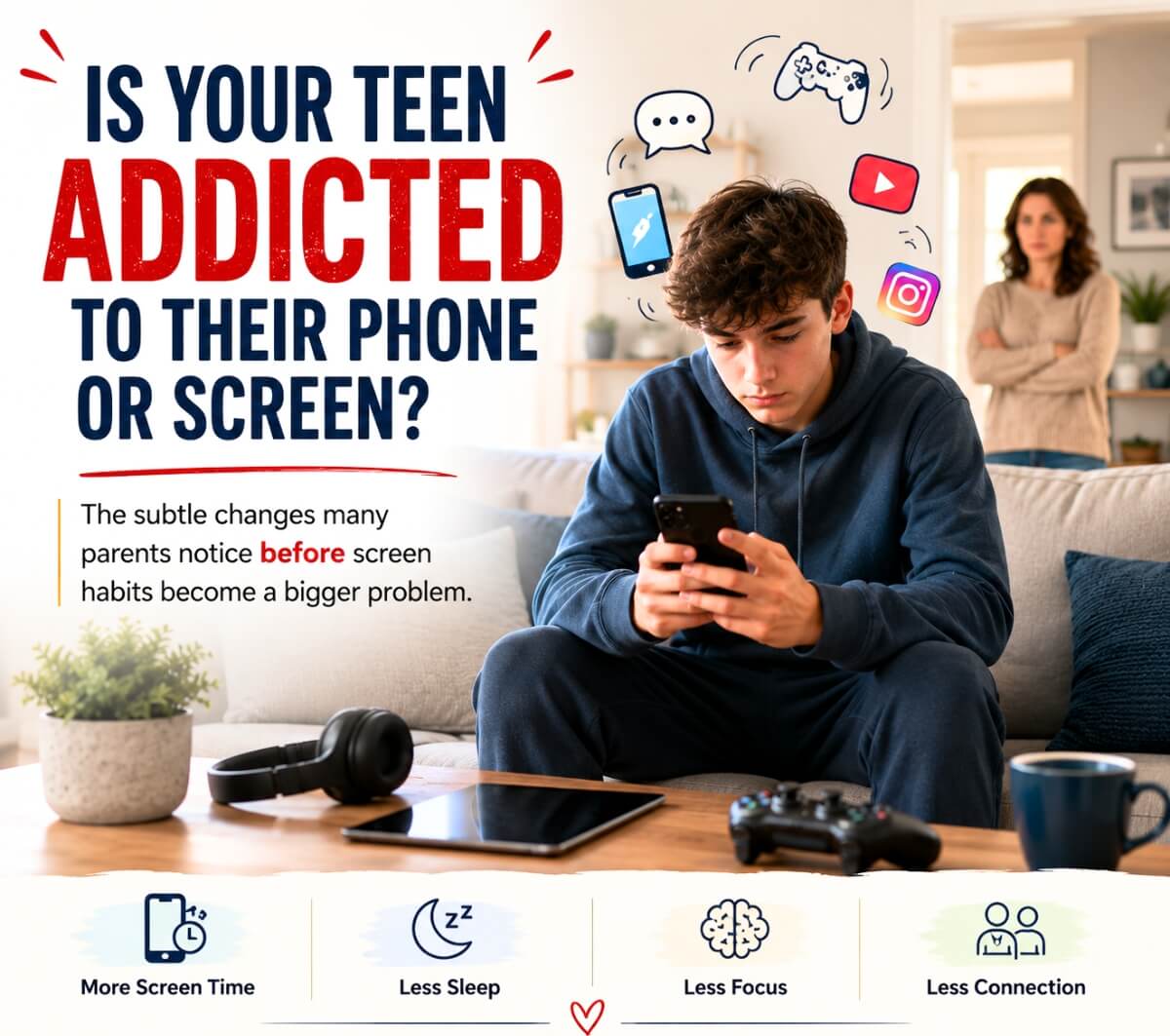
Today's phones, tablets, gaming consoles, TVs, social media apps, and streaming platforms are designed to keep attention for as long as possible.
If you've been wondering whether screens are becoming a problem, these warning signs may help.
10 Warning Signs Your Teen May Need a Screen Reset
🚩 1. Screens Are The First Thing They Reach For
Does your teen check their phone before even getting out of bed?
When screens become the first thing a teen reaches for each morning, it may indicate that digital habits are beginning to control their daily routine.
Healthy habits usually start the day with intention. Unhealthy screen habits often start the day with automatic scrolling.
🚩2. They Struggle To Put Devices Down
Many teens say:
"Just five more minutes."
Yet five minutes quickly become thirty.
Then an hour.
Then the entire evening.
If stopping screen use regularly leads to frustration, arguments, or repeated delays, it may be a sign that the habit has become difficult to control.
🚩3. Schoolwork Takes Much Longer Than It Should
Homework isn't always the problem—constant distractions often are.
Notifications, social media, videos, and gaming can interrupt focus every few minutes.
As a result, simple assignments may take much longer than they should.
Over time, this can affect productivity, confidence, and academic performance.
🚩4. Real-Life Activities No Longer Feel Interesting
Many parents notice that activities their teen once enjoyed slowly begin disappearing.
Sports.
Reading.Art.
Outdoor activities.
Family time.
When nearly every free moment is spent on a screen, real-world experiences can start feeling less exciting compared to the constant stimulation provided by technology.
🚩5. They Become Irritable When Screen Time Is Limited
If removing a device regularly triggers anger, frustration, or emotional outbursts, it may be a sign that screen use has become emotionally connected to comfort, boredom relief, or stress management.
Screens should be a tool—not the only way a teen knows how to relax.
🚩6. Screens Have Become Their Main Source Of Entertainment
Many teens now turn to screens for almost every free moment.
Whether it's scrolling, gaming, streaming, or social media, screens often become the default choice.
Over time, real-life hobbies, creativity, and meaningful experiences can begin to take a back seat.
When screens become the main source of entertainment, balance and healthy habits can slowly disappear.
🚩7. Sleep Routines Are Getting Worse
Late-night scrolling is one of the most common screen-related challenges parents face.
Many teens stay online far longer than intended.
As a result, they may struggle with: • Falling asleep • Waking up on time • Morning motivation • Daytime energy.
Healthy sleep is one of the foundations of healthy teen development.
🚩8. Family Conversations Are Becoming Shorter
Have you noticed that your teen is physically present but mentally somewhere else?
Family meals.
Car rides.
Evening conversations.
Many opportunities for connection are now competing against screens.
Over time, this can affect communication and family relationships.
🚩9. They Feel Bored Without Their Phone
Boredom is a normal part of life.
In fact, boredom often leads to creativity, problem-solving, and personal growth.
However, when a teen immediately reaches for a device every time boredom appears, they may never learn how to engage with the world in other meaningful ways.
🚩10. Screens Are Becoming Their Default Activity
Perhaps the biggest warning sign is this:
Whenever there is free time...The screen wins.
Not occasionally. Almost always.
When screens become the default choice for entertainment, comfort, socializing, relaxation, and free time, balance begins to disappear.
Why This Matters More Than Most Parents Realize
The concern isn't simply how much time teens spend on screens.
The concern is what screens may be replacing.
Every hour spent scrolling is often an hour not spent:
📚 Learning
🎯 Building skills
⚽ Participating in activities
💬 Connecting with family
🌱 Developing confidence
🚀 Preparing for the future.
The teenage years are a critical time for growth, independence, self-discovery, and habit formation.
The habits developed today often follow them into adulthood.
The Good News: Change Is Possible
If you recognize some of these warning signs, don't panic.
Many families are facing the same challenge.
The goal is not to eliminate technology.
The goal is to help teens develop a healthier relationship with it.
Small changes practiced consistently can create meaningful improvements over time.
A Practical Solution For Parents
Knowing there is a problem is one thing.
Helping your teen change their habits is another.
That is exactly why we created:
THE SCREENRESET PROGRAM
A 21-Day Guided Reset for Healthier Screen Habits
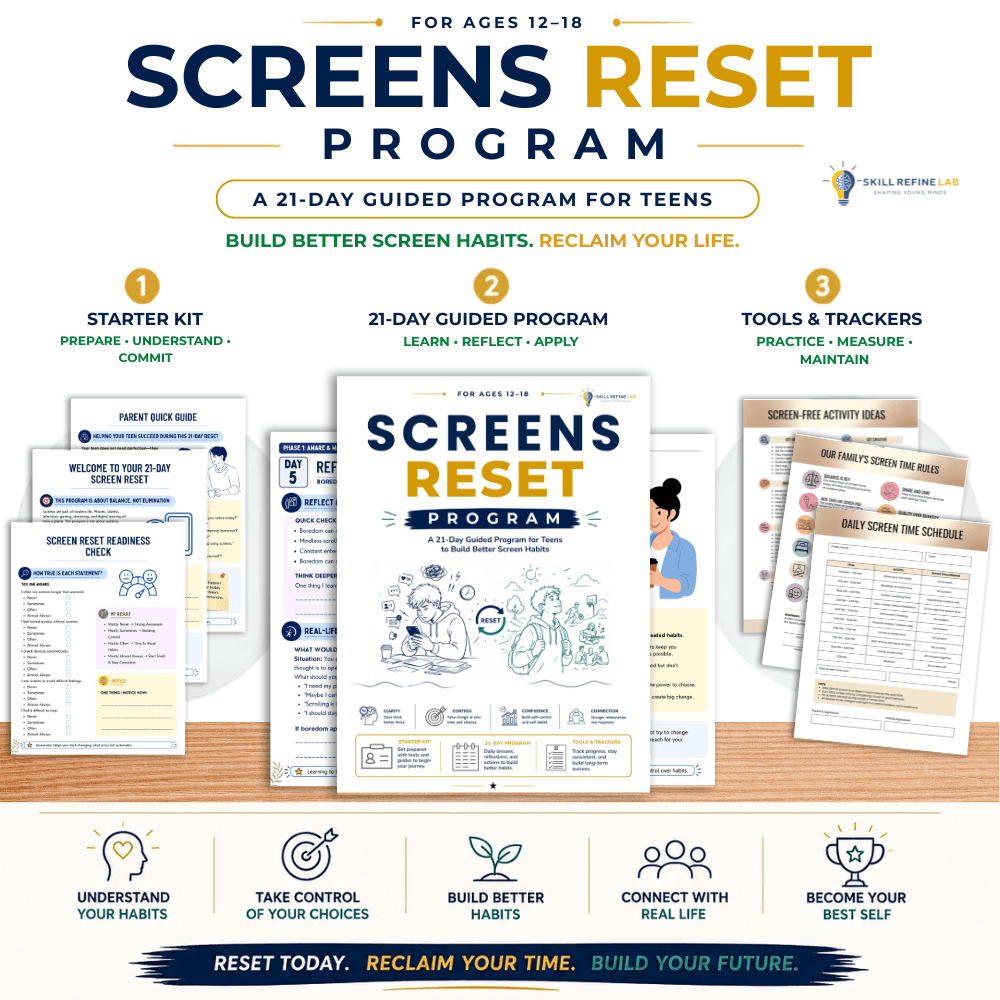
Designed specifically for today's teens, this step-by-step program helps them:
✔ Understand why screen habits develop
✔ Identify personal triggers
✔ Reduce mindless scrolling
✔ Strengthen focus and attention
✔ Build healthier daily routines
✔ Improve self-control
✔ Create a more balanced life beyond screens
Included In The Program
📘 Parent Guide
📘 Starter Kit (6 Pages)
📘 21-Day Guided Program (42 Pages)
📘 Tools & Trackers (16 Pages)
🎁 Self-Love Planner
🎁 Self-Confidence Planner
🎁 Personal Growth Planner
🎁 Calming Your Mind Journal
Final Thoughts
Screens are not the enemy.
But when screens begin replacing focus, growth, relationships, hobbies, and real-life experiences, it may be time for a reset.
The earlier healthy habits are built, the easier they are to maintain.
Your teen's future will be shaped by the habits they practice every day.
Make sure screens aren't making those choices for them.
Ready To Help Your Teen Build Healthier Habits?
👉 Explore The Screen Reset System™ and take the first step toward stronger focus, better routines, and a healthier life beyond screens.

SkillRefineLab supports children from toddlers to teens with printable learning resources and parenting guides that build confidence, focus, emotional strength, and real-life skills.