Why Teens Suddenly Get Angry: 10 Reasons Every Parent Must Understand
Parenting a teenager can sometimes feel confusing, exhausting, and even heartbreaking.
One day, your teen seems happy and cooperative. The next day, they are frustrated, defensive, irritable, or angry over something that appears small.
If you've ever asked yourself:
• "Why is my teen always angry?"
• "Why does my teen get upset so easily?"
• "What happened to my sweet child?"
You're not alone.
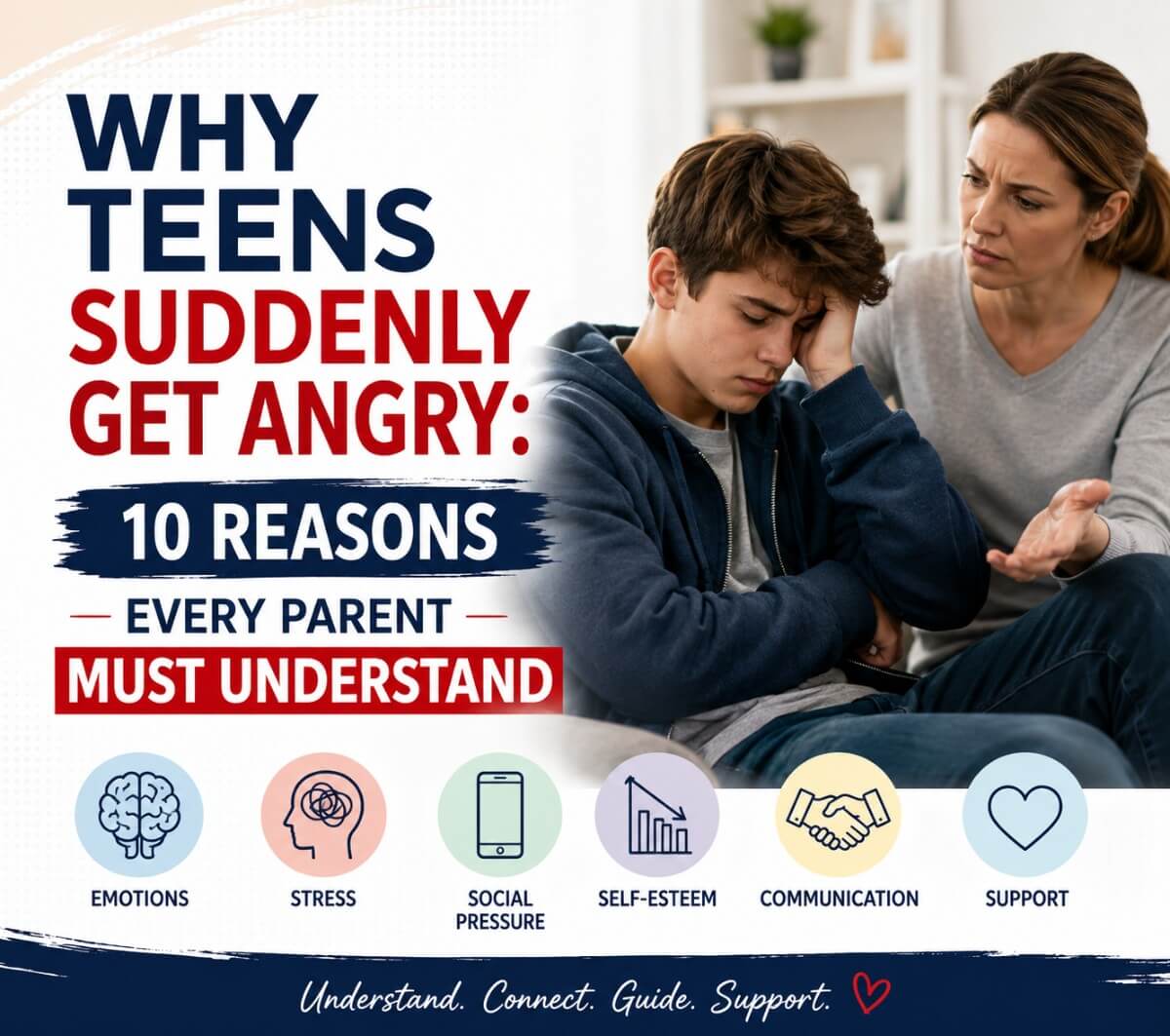
🔹 Here's what many parents don't realize:
Anger is often not the real problem.
In many cases, anger is simply a visible sign of stress, fear, frustration, insecurity, disappointment, or emotional overwhelm.
When parents learn to understand what is happening beneath the anger, they can respond in ways that build trust instead of conflict.
1️⃣ The Emotional Brain Develops Faster Than Self-Control
During the teenage years, the emotional centers of the brain develop faster than the areas responsible for judgment, planning, and impulse control. This means teens often experience emotions more intensely than adults. They may react quickly before they have time to think through the consequences.
⚠️ What This Looks Like
• Sudden outbursts
• Overreacting to small problems
• Difficulty calming down
• Emotional reactions that seem extreme
✔ What Parents Can Do
• Stay calm when emotions rise
• Avoid arguing during emotional moments
• Wait until your teen is calm before discussing consequences
Key Insight:
Your teen isn't trying to be difficult. Their brain is still learning to control emotions.
2️⃣ School Pressure Creates Hidden Stress
Today's teens face more pressure than many parents realize. Grades, tests, college preparation, sports, extracurricular activities, and social expectations can create constant stress. When stress builds without a healthy outlet, it often appears as anger.
⚠️ Warning Signs
• Irritability after school
• Frequent frustration
• Complaints about pressure
• Increased emotional reactions
✔ What Parents Can Do
• Focus on effort rather than perfection
• Encourage healthy breaks
• Create a safe space for honest conversations
Remember:
A stressed teen often needs support more than criticism.
3️⃣ Social Media Creates Constant Comparison
Many teens spend hours comparing themselves to carefully edited versions of other people's lives.
They compare:
• Appearance
• Popularity
• Friendships
• Achievements
• Lifestyle
Over time, this comparison can create feelings of inadequacy and frustration.
⚠️ Signs It May Be Affecting Your Teen
• Low confidence
• Mood changes after scrolling
• Feeling left out
• Increased sensitivity
✔ What Parents Can Do
• Talk openly about social media realities
• Encourage offline activities
• Help your teen focus on their own strengths
Important:
Comparison often creates frustration, and frustration often becomes anger.
4️⃣ Teens Feel Deeply but Struggle to Express It
Many teenagers experience strong emotions but don't have the vocabulary to explain them.
Instead of saying:
"I'm hurt., "They may say: 'Leave me alone!"
Instead of saying:
"I'm embarrassed."They may react with anger.
⚠️ Hidden Emotions Behind Anger
Hurt, Fear, Embarrassment, Sadness, Disappointment, and Loneliness
✔ What Parents Can Do
• Help your teen name emotions
• Ask open-ended questions
• Listen more than you lecture
Key Insight:
Sometimes anger is simply sadness wearing armor.
5️⃣ They Want Independence but Still Need Support
Teenagers are caught between childhood and adulthood. They want freedom, privacy, and independence. At the same time, they still need guidance and support. This internal struggle often creates frustration and conflict.
⚠️ Common Triggers
• Rules and boundaries
• Curfews
• Screen limits
• Family expectations
✔ What Parents Can Do
• Offer choices whenever possible
• Explain rules calmly
• Respect growing independence
Teens are more likely to cooperate when they feel respected.
6️⃣ Feeling Misunderstood Triggers Defensiveness
Many teens believe nobody understands what they're going through. When they feel judged, criticized, or dismissed, they often become defensive. Defensiveness can quickly turn into anger.
✔ What Parents Can Do
• "Nobody listens to me."
• "They don't understand."
• "I'm always getting blamed."
✔ What Parents Can Do
• Listen without interrupting
• Validate feelings before correcting behavior
• Ask questions with curiosity
Remember:
Being understood is one of the strongest emotional needs during adolescence.
7️⃣ Lack of Sleep Makes Anger Worse
Sleep affects every part of emotional regulation. Unfortunately, many teens don't get enough sleep. When teens are tired, their ability to manage frustration decreases dramatically.
✔ What Parents Can Do
• Mood swings
• Short temper
• Low patience
• Difficulty concentrating
✔ What Parents Can Do
• Create consistent bedtime routines
• Reduce screen use before bed
• Prioritize sleep as seriously as academics
A well-rested teen is often a calmer teen.
8️⃣ Family Conflict Can Fuel Anger
Even when teens act independently, they are strongly affected by the emotional climate at home. Frequent arguments, criticism, tension, or constant conflict can increase emotional stress.
⚠️ Home Environment Matters
• How family members communicate
• How disagreements are handled
• How emotions are expressed
✔ What Parents Can Do
• Model calm communication
• Avoid yelling during disagreements
• Focus on connection before correction
Key Insight:
The emotional atmosphere at home shapes how teens manage their emotions.
9️⃣ Fear of Failure Often Shows Up as Anger
Many teens are afraid of failing. They may worry about: School performance, Sports, Friendships, Social acceptance, and Future goals
Rather than expressing fear directly, some teens express anger.
✔ What Parents Can Do
• Normalize mistakes
• Praise effort and growth
• Teach resilience instead of perfectionism
Behind many angry reactions is a teen who feels overwhelmed or afraid of not being good enough.
🔟 Anger May Be Hiding Anxiety or Emotional Pain
Sometimes anger is only the surface emotion. Underneath it may be: Anxiety, Loneliness, Stress, Low, self-esteem, Emotional overwhelm, and Mental health struggles
When parents focus only on the behavior, they may miss the real issue.
✔ What Parents Can Do
• Look beyond the outburst
• Ask what your teen might be feeling
• Seek professional support when needed
Important:
The goal isn't just to stop the anger. The goal is to understand what's causing it.
❤️ What Every Parent Should Remember
• Teen anger is not always rebellion.
• Teen anger is not always disrespect.
• Teen anger is not always bad behavior.
• Very often, it is a signal that something deeper needs attention.
• The most effective parents don't simply react to the anger.
• They learn to understand the emotions underneath it.
When understanding replaces constant conflict, stronger relationships begin to grow.
🎯 Help Your Teen Build Emotional ControlIf
Your teen struggles with:
✔ Frequent anger
✔ Emotional outbursts
✔ Poor self-control
✔ Conflict at home
✔ Difficulty managing emotions
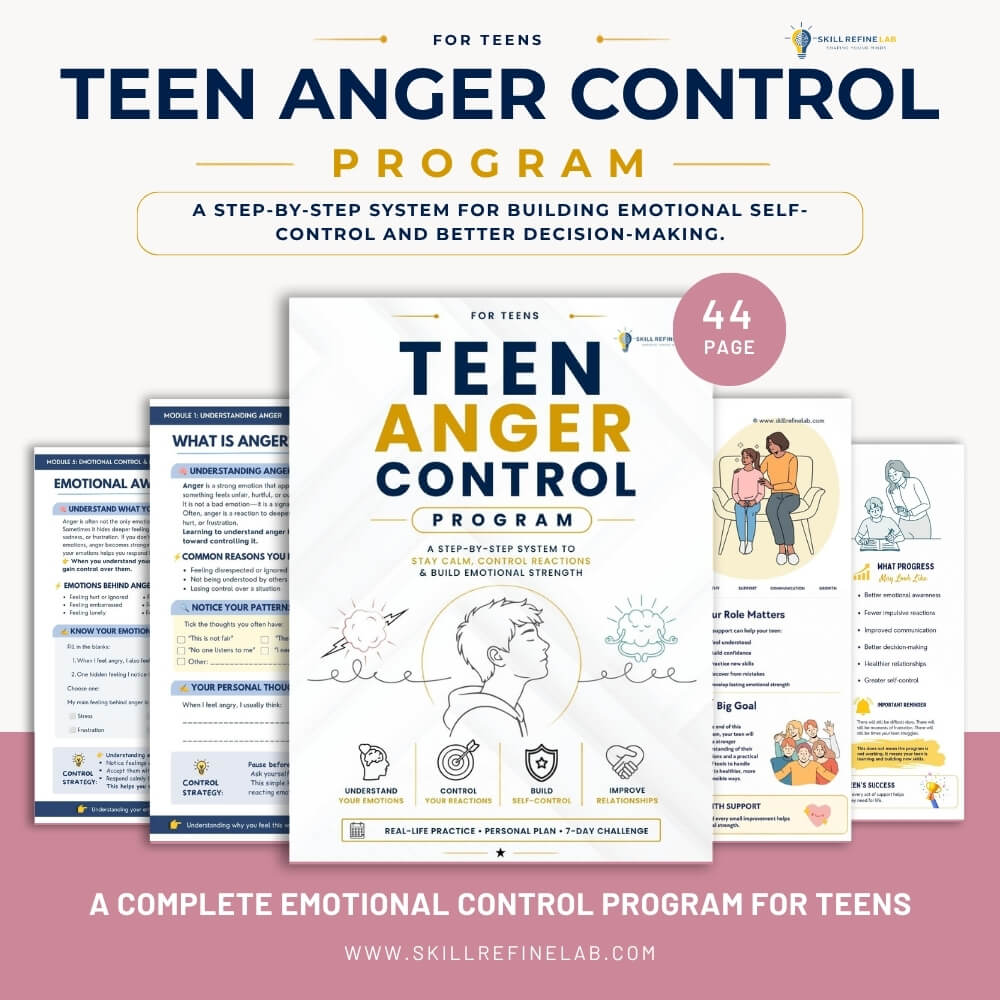
Teen Anger Control Program:
Provides a structured, step-by-step system designed to help teens:
✅ Understand anger triggers
✅ Recognize warning signs early
✅ Pause before reacting
✅ Use calming strategies effectively
✅ Improve communication skills
✅ Repair mistakes after conflict
✅ Build lasting self-control
✅ Create a personal anger control plan
🌟 Final Thought
Your teen doesn't need to be perfect.
They simply need the right tools, guidance, and support to learn healthier ways to manage their emotions.
And that journey can start today.
Top Printable & Articles
Most Loved Parenting & Child Development Resources
Discover the parenting strategies, learning ideas, and child development resources families find most helpful.
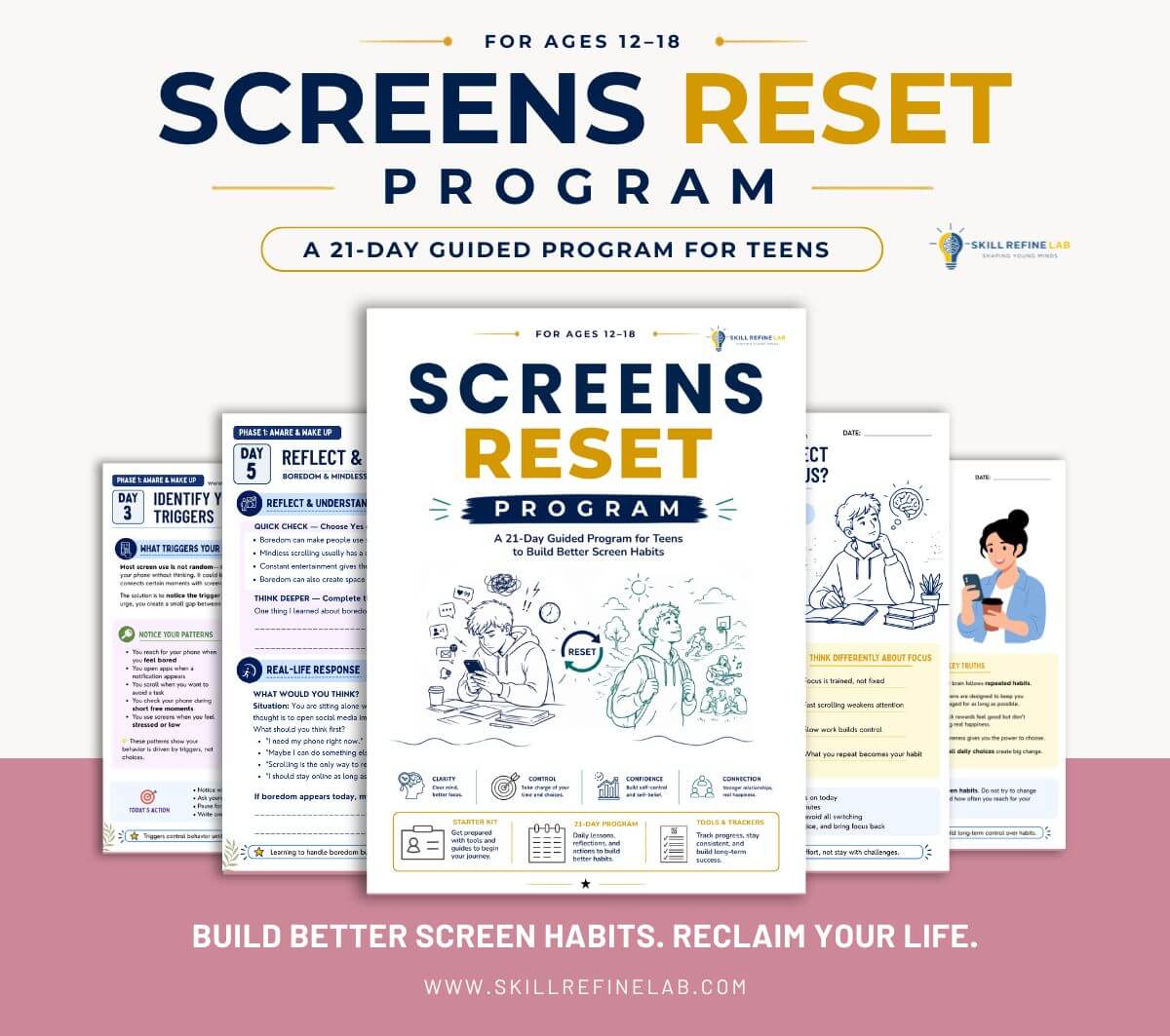
Printable Program
A 21-Day Guided Program for Teens to Build Better Screen Habits
Give Them The Tools To Build Focus, Confidence, And Healthier Screen Habits. The Habits Your Teen Builds Today Can Shape The Opportunities They Have Tomorrow.

Screen Time and Digital Wellness
Is Your Teen Addicted to Their Phone or Screen?
10 Warning Signs Every Parent Should Know Before It's Too Late
📱 It Usually Starts Small...✔ Just one more video✔ Just one more game
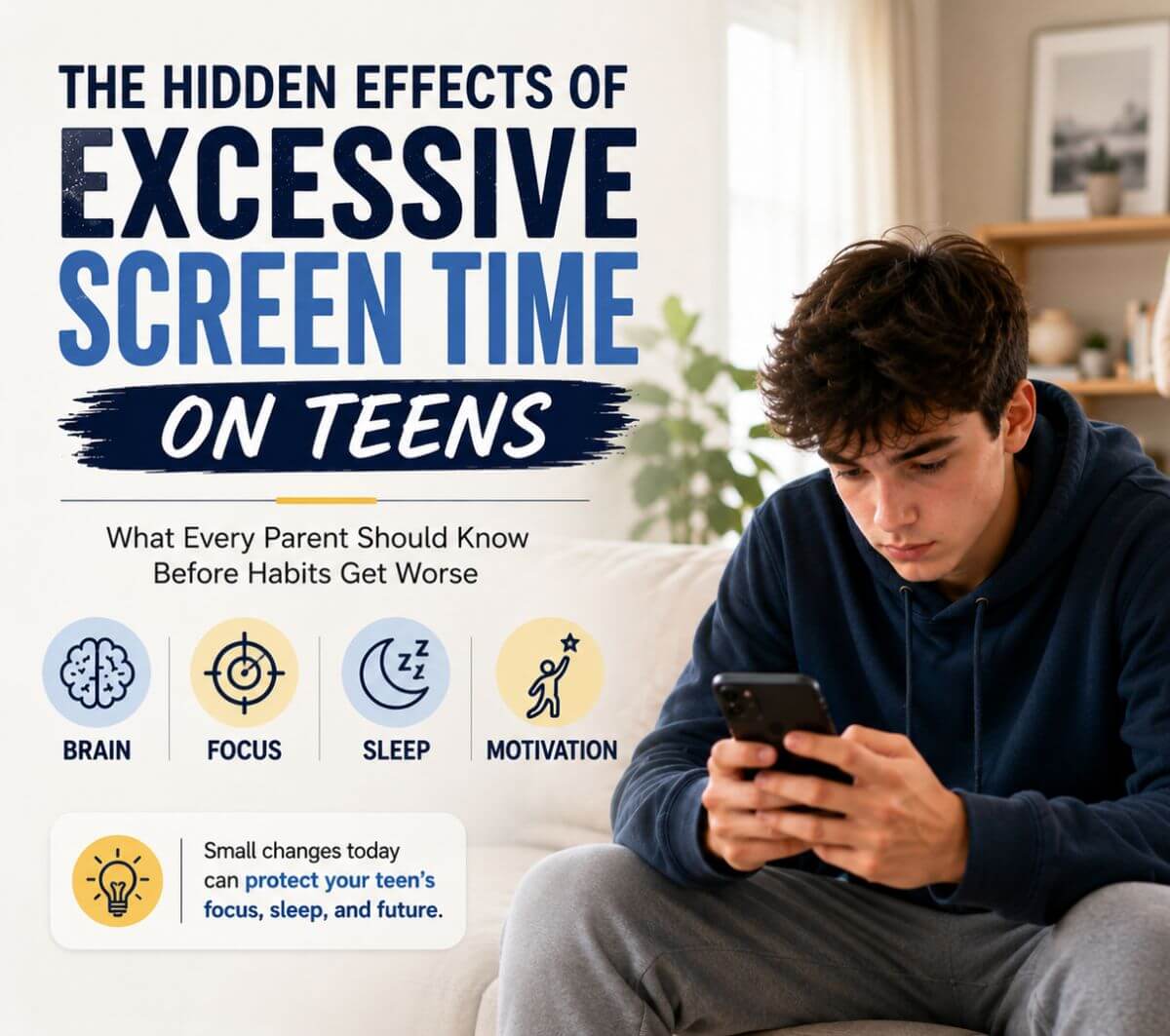
Teen Brains, Focus, and Screen Time
How Too Much Screen Time Is Affecting Your Teen's Brain, Focus, Sleep, and Motivation
What Every Parent Needs To Know Before The Problem Gets Worse
📱 It Doesn't Look Dangerous At First

SkillRefineLab supports children from toddlers to teens with printable learning resources and parenting guides that build confidence, focus, emotional strength, and real-life skills.